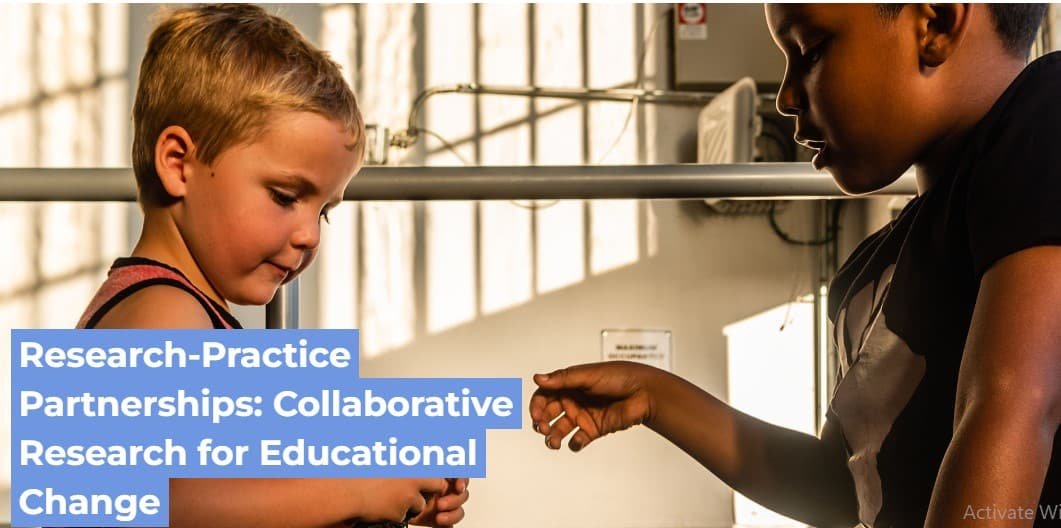
Applications are open for Spencer Foundation Research-Practice Partnership (RPP) Grants Program 2026. The Research-Practice Partnership (RPP) Grants Program is intended to support education research projects that engage in collaborative and participatory partnerships with project budgets up to $400,000 and durations of up to three years. They accept preproposals once a year in this program.
They view partnerships as an important approach to knowledge generation and the improvement of education, broadly construed. Over the long term, we anticipate that research conducted by RPPs will result in new insights into the processes, practices, and policies that improve education for learners, educators, families, communities, and institutions where learning and teaching happen (e.g., schools, universities, community centers, parks, museums, other workplaces).
This grant program is open to existing partnerships between researchers and a broad array of practitioners and policymakers. For example, practice and/or policy partners might work in school districts, county offices of education, state educational organizations, universities, community-based organizations, and other social sectors that significantly impact learners’ lives. As such, they define practitioners broadly; they might be policymakers, out-of-school-time providers and other informal educators, K-12 teachers and leaders, or families and other community members. Spencer is open to applications from design-based research teams, networked improvement communities, place-based research alliances, and a wealth of other partnership arrangements.
Activities that May be Funded
Research is fundamental to every research-practice partnership, and we expect research activities to be the central element of every proposal. In addition to detailing a plan for research, applicants should also prioritize plans for communicating and disseminating key findings and other important partnership activities that have the potential to foster positive educational changes.
- Research Activities
- Each proposal should describe new research that would be launched or existing research activities that would be expanded with the grant. Examples might include randomized trials of new curricula, participatory studies with learner and family coresearchers; design-based research focused on teacher classroom practice; policy advocacy or implementation; needs mapping with community partners; or deep descriptive work focused on a range of learner outcomes. We encourage a wide range of research methods and approaches.
- Research Infrastructure
- Funds may be used for building and sustaining infrastructure needs for the research activities of the partnership. These infrastructure needs may apply to the full range of methodological approaches. Examples may include the development of surveys, assessment tools, and other instruments; the development of co-designed protocols; and the upkeep of data archives and matching systems. Additionally, administrative activities concerning data may be supported by this grant. These may include developing IRB and review protocols, creating standard data definitions, co-designing consent forms, and developing data security and privacy protocols.
- Outreach, Communications, and Relationship Building
- Activities that strengthen the working relationship between partners and other stakeholders are also a possible component of the projects. Successful research-practice partnerships devote a great deal of time and attention to building and maintaining trust across stakeholder groups and within their partnership. Potential activities may include convening researchers, educators, learners, families, and other participants to co-design a research agenda; hiring a communication specialist and/or developing a strategy for communicating research findings to important constituents; supporting staff in the partner organizations to manage partnership relations; and preparing research reports and other publications to present the work of the partnership to the public.
- Capacity Development
- Many research-practice partnerships seek to assist the practice partner in developing capacity to use research evidence and data in their daily decision-making. Funds could be used to learn how to better engage others in research, conduct better practice or policy-driven research, or to be better equipped to communicate complex research findings to practitioners, families, communities, or policy makers that were not primary partners.
Spencer Foundation RPP Grants Details
- The Research-Practice Partnership (RPP) Grants Program is intended to support education research projects that engage in collaborative and participatory partnerships with project budgets of up to $400,000 and durations of up to three years.
Eligibility Criteria
- Proposals to the Research-Practice Partnership program must be for research and other activities aimed to support collaborative partnerships between academic researcher(s) and a broad array of practitioner(s) of education.
- Principal Investigators (PIs) and Co-PIs applying for a Research-Practice Partnership Grant are expected to have an earned doctorate in an academic discipline or professional field, or demonstrated professional experience appropriate for this program. Note: If the PI or Co-PI from the practice/policy side of the partnership does not have an earned doctorate, they are expected to have appropriate professional experience to serve in this role in the partnership. While graduate students may be part of the team, they may not be named the PI or Co-PI on the proposal.
- The PI must be affiliated with a non-profit organization or public/governmental institution that is willing to serve as the administering organization if the grant is awarded. The Spencer Foundation does not award grants directly to individuals. Examples include non-profit or public colleges, universities, school districts, and research facilities, as well as other non-profit organizations with a 501(c)(3) determination from the IRS (or equivalent non-profit status if the organization is outside of the United States).
- The PI associated with the administering organization for this grant could be either the practitioner/policymaker or researcher of the partnership. At least one Co-PI should be from the other member organization(s).
- Proposals are accepted from the U.S. and internationally. All proposals must be submitted in English and budgets must be proposed in U.S. Dollars.
How To Apply for Spencer Foundation RPP Grants
The application process begins with the submission of a preproposal. After the preproposal review, Spencer will notify applicants who are invited to submit a full proposal and will provide further instructions at that time.
Click Here to Apply and for More details
Preproposal Application Deadline: July 10, 2026, 12:00 PM Noon (Central/Chicago Time)
Full Proposal (By Invitation) Deadline: October 28, 2026, 12:00 PM Noon (Central/Chicago Time)
Elevate Your Business With Our Expert Services!
 Business Plan/Proposal Writing Service
 Feasibility Studies
 Farm Consultation and Setup Service
 Grant Writing & Project Management
 Website Development Service
 We have the experience and proven track record. Contact us today to take your business to new heights!
 Call us @ 08034969689 or WhatsApp link https://wa.link/fw8tnw
 Visit our website @ https://agribusinessdigest.com.ng/futuregreenfarm
 Email us @ futuregreenfarm@gmail.com